Graduate Fellows Program
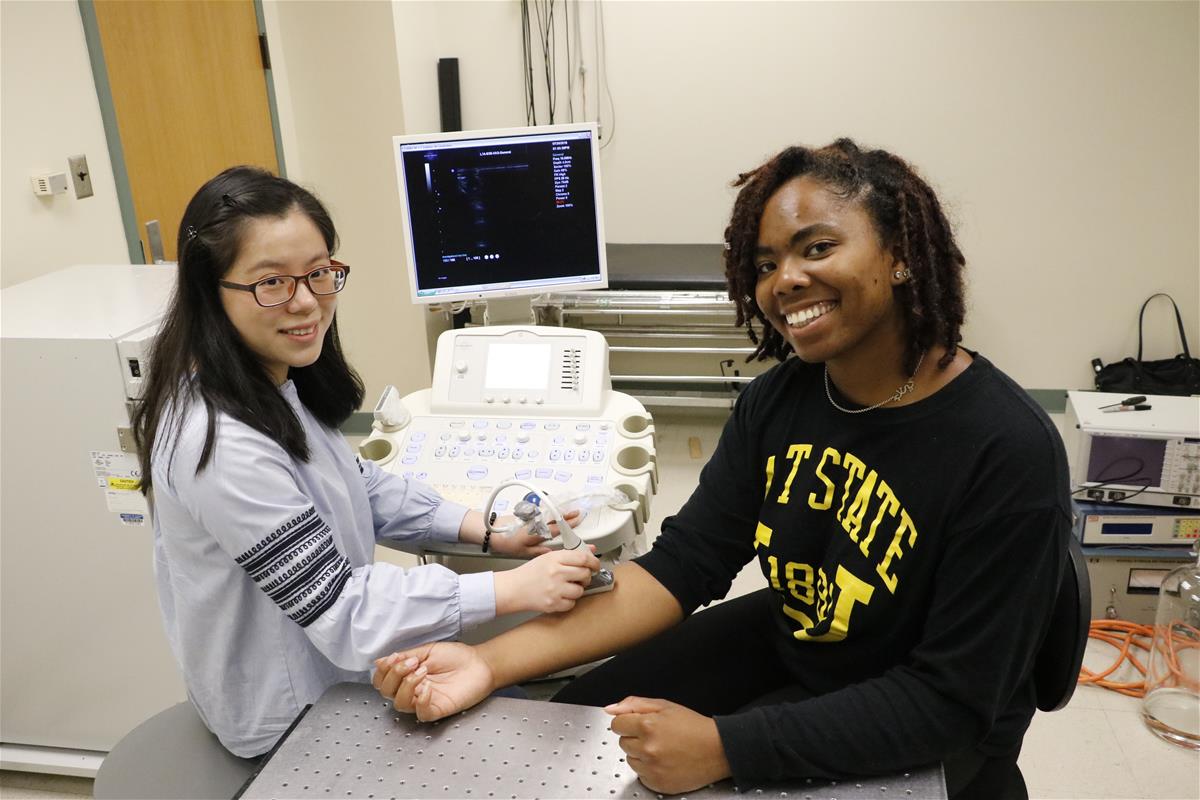
The Beckman Institute Graduate Fellows Program offers University of Illinois graduate students at the M.A., M.S. or Ph.D. level the opportunity to pursue interdisciplinary research at the institute. This program is supported by funding from the Arnold and Mabel Beckman Foundation.
The Beckman Institute Graduate Fellows Program offers University of Illinois graduate students at the M.A., M.S. or Ph.D. level the opportunity to pursue interdisciplinary research at the institute. This program is supported by funding from the Arnold and Mabel Beckman Foundation.
The application period for 2026-27 Beckman Institute Graduate Fellowships has passed. Please check back in spring 2027.
Guidelines
Applicant must be a University of Illinois graduate student engaged in thesis research at the M.A., M.S. or Ph.D. level. Each applicant must submit a proposal for an interdisciplinary research project to be pursued during the 11-month appointment.
The project must involve active participation by at least two Beckman faculty members, with at least one being a Beckman Institute full- or part-time faculty member who conducts research at Beckman. Proposed research must be performed mainly at the Beckman Institute.
Applications will be evaluated in terms of quality of proposed work, likelihood that work will lead to important new results in science and engineering and relevance of proposed project to Beckman Institute research. Those selected for this program will be hired as graduate research assistants.
Application requirements
Fill out application form
Applicants must fill out the online application form (University of Illinois NetID and password are required). The form also allows for the electronic submission of supporting documents, including your curriculum vitae and research project proposal.Curriculum vitae
A current curriculum vitae must be submitted as an Adobe PDF file using the upload form mentioned above.Research project
A description of the proposed research project to be pursued, if you are selected as a Beckman Institute Graduate Fellow. Your research project description should not exceed three single-spaced pages. Your references will not count toward the three-page limit. Your description needs to make a clear case regarding how the proposed research will foster interdisciplinary research. The research plan must be submitted as an Adobe PDF file using the upload form mentioned above.Letters of recommendation
In addition to the above materials, two letters of recommendation from Beckman faculty members need to be submitted as Adobe PDF files, via e-mail to beckmanfellows@beckman.illinois.edu. These need to be received by the application deadline.
Two of the faculty must co-supervise the research. By supporting this application, the two faculty sponsors are agreeing to provide the incidental funding necessary for the applicant to accomplish their research project.
Assistantship
Students selected for this program will be hired as graduate research assistants. The assistantship is an 11-month, 50% appointment with the pay rate of the graduate student’s home department. Up to $2,000 will also be provided to each awardee for approved conference travel.
Questions?
Thank you for your interest in the Beckman Institute Graduate Fellows competition.
Beckman Institute Graduate Fellows Program FAQ.
Email us if you still have questions after reading through this page.
The latest news about Beckman Institute Graduate Fellows
Beckman Institute for Advanced Science and Technology